NIAGARA FALLS state park LIVE.... in my CLASS!

Wednesday, 23 May 2018 No comments
You can't travel the world with your students.... 
but you can take virtual trips with them!
Well... this morning we had an appointment, a very important (virtual) meeting which had been set up months ago. 
At 12.30 our time we had a Skype conference call with Mr. Jim Hill, senior manager of heritage operations at the Niagara Park in Ontario. 


Jim works here! Now isn't this amazing!
Well... he was so nice to go to work a bit earlier this morning and at 6.30 am (his time) he called us, as agreed! My students were so excited... and so was I! I mean.. who wouldn't be?
Jim introduced himself and then he took the camera and walked around! This is what we were seeing


My students were really interested and asked a lot of questions! They were able to understand and communicate in English and this experience was really motivating for them and for me!


I highly recommend using Skype in the classroom through Microsoft education. 
Can't wait to experience more of this next year!
Thank you, 
Miss Alex


10.000 THANX!

Thursday, 17 May 2018 No comments
E chi lo avrebbe mai pensato che un BLOG nato quasi per caso avrebbe avuto più di 10.000 visualizzazioni in DUE MESI???'

Sono felicissima!!! I am super HAPPY! 10.000 total pageviews in just two months! I would have never have thought that!


I have so much more to say and to share and I love the fact that you send me comments and questions and requests. Keep doing that! 
You can comment on this page, follow me by email, send me a message on my Fb page, or comment on Instragram or Youtube!

Thanks again for all the support! I have received messages from Italy, from the Usa, from the Uk, from Russia, from Belgium, from Spain, from Germany, from Argentina, from Mexico, from Australia.. and many more! Thank you so much!

Thank you, 
Miss Alex


MEGHAN AND HARRY: a love story

Monday, 14 May 2018 1 comment
The countdown has started!
Yes, this is the ROYAL WEDDING WEEK!
Whether you are a British fan... or not, I am pretty sure you have somehow heard it, accidentally or not, on the news or saw people talking about it on television. 
Well, to be honest, I haven't really paid attention to gossips or to all the speculation that I am sure has been going on over this wedding. 
I do have to admit that I wasn't really a British history/culture fan until some years ago. I have always been more interested in the American history/culture. 
Well, things change. Well, we change.
Since I started teaching about British culture and history I discovered I really liked at first, and then I found out I actually loved it. And if you really like something... when you talk about it to your students, they will like it too or at least find it interesting. 
So this is what I try to do every day. 
And this is what I am going to do this week. 
I bought books and souvenirs about this 2018 Royal wedding, I watched videos and I edited them with Edpuzzle for my secondary school students. They will use their own computer, listen to the videos and answer the questions online and, of course, send the answers  to me. 

Here are the links:


For my primary school students I edited a presentation with different worksheets which could be easily used in 3rd, 4th, 5th year primary school classes. These worksheets could be used all together or not. I am going to choose different worksheets for different classes, print them on A3 pages and then put together the whole story. 
Here are the worksheets:


On Saturday 19th we are going to work on these worksheets and videos and while watching (part of) the royal wedding and...... we are going to experience a British cream tea!
Live British, feel British, at least for one day!
Enjoy it!

Thank you, 
Miss Alex


REUSABLE STICKER PADS

Monday, 16 April 2018 No comments
A few years ago I was on holiday in the Usa with some friends. 
We were in San Diego ( such a beautiful town!) and they had rented bikes to ride around the town. At the shop they did not have enough bikes for everyone so.... I had to..... walk around and... do some shopping! 
I do have to say that I was not too sad about it as I love walking around a new town and find out new and interesting things. 
My favourite shops are, being a teacher, bookshops and stationers. I was walking around at the Fashion Valley when...

                                           (If you visit San Diego you need to go here:-)

... when I found a very nice bookstore with lots of books and teaching resources FOR SALE!

I ended up buying a lot of stuff, even more than I actually wanted. But who can say NO to extremely good sales?
I was not even sure of what I was going to do with that material or how I was going to use it but it did not matter. I would find a way to use it. As teachers we can always come up with something!

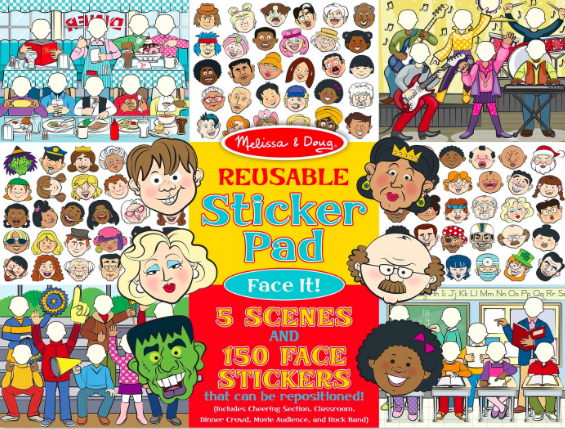
I bought three sets of MELISSA AND DOUG reusable sticker pads. They caught my attention and they were 3 x 1. 
I tried using them in my third year primary school class and they were a success!


I used this one which can be easily used to teach about appearance, emotions and present continuous. This is how I used them. In the sets there are many pages with different faces and expressions


All these are reusable stickers so they can be used for many different purposes. Children enjoy choosing the different faces and match them to the people shown on the scene settings. This is one example.


This is a school setting. There are different people doing different things, that is why this picture can be easily used to teach the Present continuous once it IS completed like this. 


Once it was completed we gave names to these different students. We described a couple of them together ( their face, their expression, the clothes they are wearing) then I took a picture of this and projected it on the Interactive board so that students could clearly see it. I divided students into groups and each group described one and then told it to the class. Since this class was a third year primary school I did not continue this work describing the actions at the Present Continuous tense, but this could be a possibility if we use these prompts in a fifth year class. 
This is the official page to get these pads


But you can also find them on Amazon


I truly think they are a good resource and so much fun! Give it a try!
Thank you, 
Miss Alex


UN MURO..... DI PAROLE!

Wednesday, 11 April 2018 No comments
"Maestra, ma come faccio ad imparare e ricordare tutte queste parole in inglese?"

Forse anche qualche vostro alunno vi avrĆ  posto questa domanda qualche volta. 
Nel corso del percorso di apprendimento della lingua inglese i nostri alunni vengono quotidianamente in contatto con nuove parole e il nostro compito come insegnanti ĆØ anche quello di aiutarli a trovare dei metodi per ricordarli e saperli quindi utilizzare nel futuro. 
In pratica, come possiamo facilitare il passaggio del "vocabulary" dalla short term memory alla long term memory?

Non credo esista una risposta univoca a questa domanda. Credo piuttosto che ogni insegnante abbia nel proprio bagaglio esperienziale una serie di tentativi e di strategie che anno dopo anno propone ai propri studenti. Alcune strategie si rivelano funzionali e danno buoni risultati. Altre necessitano di essere modificate, mentre altre ancora magari non funzionano proprio. 
Queste, a mio avviso, sono alcune delle strategie che hanno dato buoni risultati nelle mie classi:

1) Insegnare il nuovo lessico riferendolo sempre ad un contesto. 
I libri di testo sono scritti per "unitĆ " e solitamente il lessico presentato in una determinata unitĆ  ĆØ riferito a quel contesto. Ho visto che in questo modo i ragazzi riescono a ricordare molto meglio le parole nuove. 

2) Può essere utile e funzionale introdurre anche l'insegnamento di parole nuove raggruppandole per suoni simili, come propone anche il metodo di apprendimento naturale della lingua inglese basato sul phonics approach.

3) Abbinare la nuova parola  o le nuove parole ad una immagine, grazie all'uso di flashcards. Ho proposto flashcards con e senza parola scritta e credo che quelle con la parola scritta solamente sul retro siano molto più funzionali

4) Riprendere e riutilizzare le parole precedentemente studiate aggiungendo quelle nuove. La ripetizione ( senza che questa venga eccessivamente forzata, ma semplicemente perchƩ richiesta nella comunicazione) aiuta a ricordare.

5) Chiedere agli alunni di provare a tradurre quello che sentono o quello che leggono. La traduzione dalla lingua inglese alla lingua italiana viene spesso considerata negativamente e quindi evitata. Personalmente credo che possa essere proposta e anche vissuta positivamente dagli alunni, in modo particolare da quelli più grandi della scuola primaria ( quarta e quinta). La curiositĆ  di sapere e di conoscere ĆØ naturale nel bambino, quindi perchĆ© non assecondarla e stimolarla nel modo giusto?              Tra l'altro succede anche che quando il bambino conosce un vocabolario minimo riesce poi anche in autonomia a dedurre per senso logico anche il resto. Un mio alunno in una classe terza ha dedotto il significato della parola "caterpillar" leggendo in modo selettivo un brano di comprensione. Mi ha detto: "Teacher.... qui si parla di un animale che mangia tanto e poi diventa farfalla.. deve essere per forza un bruco!"

6) Suggerire attivitĆ  per memorizzare le parole anche a casa.
PerchƩ non riempire il frigorifero o la camera di post-it con scritte le parole che si sono apprese in classe? In questo modo impara tutta la famiglia, no?

7) Tenere un WORDWALL in classe. Questo ĆØ il mio. Ogni volta che si imparano nuove parole si possono creare delle Flashcards o semplicemente scrivere sui Post it colorati. Si possono poi fare dei giochi con le parole.


Ecco alcuni esempi di varie attivitĆ  che si possono fare con il WORDWALL


Potrebbe essere una buona idea creare un PERSONAL WORDWALL come questo ad esempio


8) Proporre giochi utilizzando le parole apprese, sia quelle nuove che quelle giĆ  imparate e conosciute. La stimolazione della sfera emotiva stimola positivamente l'apprendimento e gli alunni ricordano facilmente e senza sforzo. Lo scorso anno in una classe quarta mi sono inventata il gioco della "Messy classroom", una attivitĆ  molto semplice, che non richiede alcuna preparazione e che ha divertito molto i miei alunni. Ho chiesto ai miei alunni di lasciare giacche, sciarpe e guanti sui tavoli. Li ho fatti uscire dalla classe per un paio di minuti e ho messo tutto in disordine. Quando sono entrati si sono messi in fondo alla classe. Gli ho chiesto di osservare bene e poi si sono girati tutti con il viso verso la parete. A turno dovevano ricordare ed indovinare dove fossero posizionati gli indumenti e a chi appartenessero. Chi indovinava si "teneva" il capo di abbigliamento che corrispondeva ad un punto.Gli alunni si sono divertiti molto e con un solo gioco hanno ripassato i capi di abbigliamento, le preposizioni ed il genitivo sassone. Ma soprattutto... si sono divertiti!


Prima di far entrare i bambini avevo scattato le foto dell'aula. Una volta terminata la lezione le ho stampate e la lezione successiva hanno lavorato sul quaderno e hanno scritto le frasi che avevano detto la lezione precedente. 

A mio parere la chiave dell'apprendimento del lessico ĆØ motivazionale. Se c'ĆØ uno scopo, un interesse i bambini apprendono volentieri e, soprattutto, ricordano. 

Thank you, 
Miss Alex


MY ENGLISH ROOM AT SCHOOL

Monday, 9 April 2018 No comments


I believe that creating a positive learning environment is the first step start off on the teaching and learning path on the right foot. 
A dynamic and engaging classroom can stimulate the student's attention and foster curiosity and learning without the teacher even being aware of it because the learning process happens naturally.

Primary school classrooms are always so lively and full of pictures, posters and most of them are made by the students themselves! This is a wonderful way to boost self-esteem and to have a constant reminder of the learning experience.


This is even more important for the Esl or Efl classroom. So how do we do it?
Well, there are many different ways and this is just an example of my room at school.


Students are encouraged to leave me messages, notes and letters and I will reply to them!


I bought these poster in the Uk or in the USA  at stationery shops like the Dollar tree store or the Poundland or the 99store. If you happen to go to the the Uk or to the Usa pay a visit to these shops and you will be surprised!


These displays were bought from 


You can also make your own by printing out A3 format images and then laminate them. If you are Italian you can find a good quality laminator at the Lidl store, but you need to pay attention to the offers because you can only find it on certain occasions!


I found these templates for free on the Teachers Pay Teachers site and they are part of the Whole brain teaching methodology.


Round shaped rugsfrom Ikea and a British theme tablecloth from the Chinese store in my town.


Smiley faces from the Chinese store in my town


This is how my small English room looked like at the beginning of the school year ( the first pictures are from the 2016-2017 school year). I do have to say that it looks a bit different now that we are almost at the end of the year  but... that's how it always happens and that's how it shoud be, right?

Oh well... that just means I have to find new ideas for the next school year!

Thank you,
Miss Alex


L'INGLESE... PASSO DOPO PASSO... IN UK!

Wednesday, 4 April 2018 No comments
Mi capita spesso che mi venga rivolta una domanda: 

"Come posso imparare l'inglese senza studiare la grammatica, senza fare compiti, divertendomi e dedicandoci un'oretta alla settimana? E' possibile?" 


Per esperienza ho imparato che nulla ĆØ impossibile. Del resto ĆØ assolutamente possibile perdere peso non facendo una dieta, continuando a mangiare dolci e non andando in palestra, no? Tutto ĆØ possibile. 


Quindi la mia risposta spesso ĆØ: 
"Beh.. dipende da quanto sei costante. Se lo fai per piacere, senza nessuno scopo particolare certo che ĆØ possibile.  Puoi farlo online oppure trovarti un corso in presenza con un insegnante valido e stimolante. Ce ne sono tanti" 
E fin qui, tutto bene. A  volte però mi ĆØ capitato che l'esigenza di imparare la lingua inglese non provenga da un semplice piacere personale di farlo ma piuttosto da un dovere o da una necessitĆ  lavorativa.
 

Come si fa ad imparare l'inglese in poco tempo, continuando a lavorare con ritmi incalzanti e a non odiare il mio insegnante di inglese fin dalla prima lezione? 


SƬ perchĆ© potrebbe capitare che quando ci sentiamo sotto pressione o quando una cosa ci viene imposta non la facciamo poi tanto volentieri. In questo modo però si perde fin da subito quel piacere di scoprire, apprendere e apprezzare una nuova lingua che dovrebbe essere il carburante che ci fa continuare, che ci fa perseverare anche quando magari la strada potrebbe sembrare in salita. 
Apprendere una lingua straniera, avvicinarsi ad una nuova cultura ĆØ e dovrebbe essere un'esperienza positiva. 

Da insegnanti ĆØ nostro dovere cercare di consigliare al meglio i nostri studenti e per farlo ĆØ fondamentale cercare di conoscerli meglio e di capire quali sono le loro aspettative ed i loro desideri. 

Ricordo tanti anni fa un uomo che si era iscritto ad un corso di inglese per adulti. Non aveva il diploma di scuola superiore, aveva un lavoro sicuro ma cercava nuovi stimoli e nuove prospettive per il proprio futuro. Era inserito in una classe di persone molto eterogenee e molto diverse fra loro e soprattutto con esigenze e richieste molto differenti. Dopo alcune lezioni lo vedevo in difficoltĆ , lo vedevo frustrato e demotivato. Avevo cercato di rendere il corso il meno pesante possibile ma avevo avuto l'impressione che ciò che io proponevo in classe non gli risultasse molto utile e fosse quindi di poco interesse per lui. Mi dispiaceva perchĆ© vedevo che si impegnava ed aveva tanta buona volontĆ . Una sera gli ho chiesto di fermarsi a bere qualcosa dopo la lezione. Siamo andati in un bar. 
Davanti ad una tisana gli ho chiesto: 
" Ma tu, perchĆ© vuoi imparare l'inglese?". 
La sua risposta: 
" PerchĆ© prima di compiere trenta anni vorrei provare ad andare  a lavorare in Inghilterra". 
Gli ho spiegato che secondo me non doveva prima cercare di imparare la lingua e poi partire, si sarebbe demoralizzato e non sarebbe mai partito. 
Gli ho semplicemente detto: 
" Lascia perdere le lezioni, prendi e vai!". 
Non aveva senso  continuare a lavorare sui libri, parlare di grammatica e fare esercizi. SƬ perchĆ© pur non dando eccessiva importanza alla grammatica non si può pensare di imparare una lingua facendo finta che non esista! 
La prioritĆ  di questo mio studente adulto era comunicare per lavorare. 
Il giorno dopo la nostra chiacchierata si ĆØ ritirato dal corso.L'ho aiutato a cercare un lavoro tramite dei contatti in Inghilterra. L'ho rivisto dopo quasi due anni, una volta ritornato in Italia. 
" Ciao teacher" mi dice, "Ora so benissimo l'inglese. Ho passato due anni a girare l'Inghilterra lavorando per un'azienda che mette striscioni negli stadi, ho visto tanti concerti, tante partite e ho conosciuto tante ragazze inglesi! E' stata una bellissima esperienza! Grazie per avermi spinto!"


Perché ho raccontato questa storia? Perché non c'è, secondo me, un modo unico per imparare la lingua inglese. Ci sono diversi percorsi e, di sicuro, il migliore consiglio che possa dare a chiunque è:
      " Prenditi del tempo, fai una pausa e parti"